
The New Space Race 🚀
What's at stake for the future of money

🎧 To get this essay straight in your ears: listen on Spotify or Apple Podcasts
Today’s Read: 20 Minutes

All you wonderful people who read my 2021 Year in Review knew this day was coming. Today, I will be writing about crypto and I want to describe how digital currencies in 2022 will fundamentally change our relationship with money.
How’s that for an ambitious first post?
Fortunately, Bookie is a safe space and I’ll do everything I can to communicate my genuine excitement about this topic in a way that’s clear, informative, and interesting for you all.
I'll also minimize hyperbolic “crypto bro” rhetoric so you won't be rolling your eyes the whole time.
Every day there’s a new polarizing headline about how crypto is either dying or destined to replace all existing forms of money.
As with most complex topics, the reality lies somewhere in between.
Today, we’ll wade carefully into that grey area and explore the non-obvious but profound changes happening in our internet-connected economy.
We should all care deeply about what’s going to happen in 2022. How governments and businesses respond won’t just impact the wealthy or people with Coinbase accounts, it’ll have consequences for real people and their livelihoods.
Like most topics I write about, there are much smarter people thinking through these implications but I’ll offer my humble opinion on the future of money by working through 3 critical questions:
What are stablecoins?: We’ll talk about why they exist, how they work, and what they could tell us about where money is headed.
How are governments responding?: We’ll take a deep look at some recent developments in both the US and China and their respective consequences.
What should we do next?: I’ll play armchair public policy advisor and offer my thoughts on where US regulation needs to go.
What are stablecoins?
Bitcoin and Ethereum remain the most popular cryptocurrencies today but wildly fluctuating prices make them unsuitable as an everyday medium of exchange.
Imagine paying for groceries with Tesla stock. Yes, you can claim its value is only going to increase over time. Yes, I’m sure you can find someone who would accept it over cash. But, at the end of the day, most people don’t want to worry about whether their currency can actually afford the same amount of bread tomorrow.
Stablecoins offer price stability while still maintaining the convenience of not leaving the crypto ecosystem.
Let’s say you received 10 Bitcoins but want to spare yourself the anxiety of watching their value rollercoaster every day. Instead of selling your Bitcoins and then waiting a few days for the money to actually arrive in your bank account, crypto exchanges let you instantly trade your 10 Bitcoins for the equivalent amount of a dollar-pegged stablecoin like Tether (UST) or USD Coin (USDC).
In the event you want to buy more Bitcoin or other cryptocurrencies, your stablecoins let you transact instantly without waiting for an exchange to convert your dollars back into crypto.
Fast and reliable transactions are essential to any efficient market so it’s no surprise that stablecoin adoption has risen alongside this most recent boom in crypto activity. The past 3 quarters saw stablecoin quarterly transaction volume exceed $1 trillion. That’s 370% year-over-year growth relative to 2020.
How do stablecoins work?
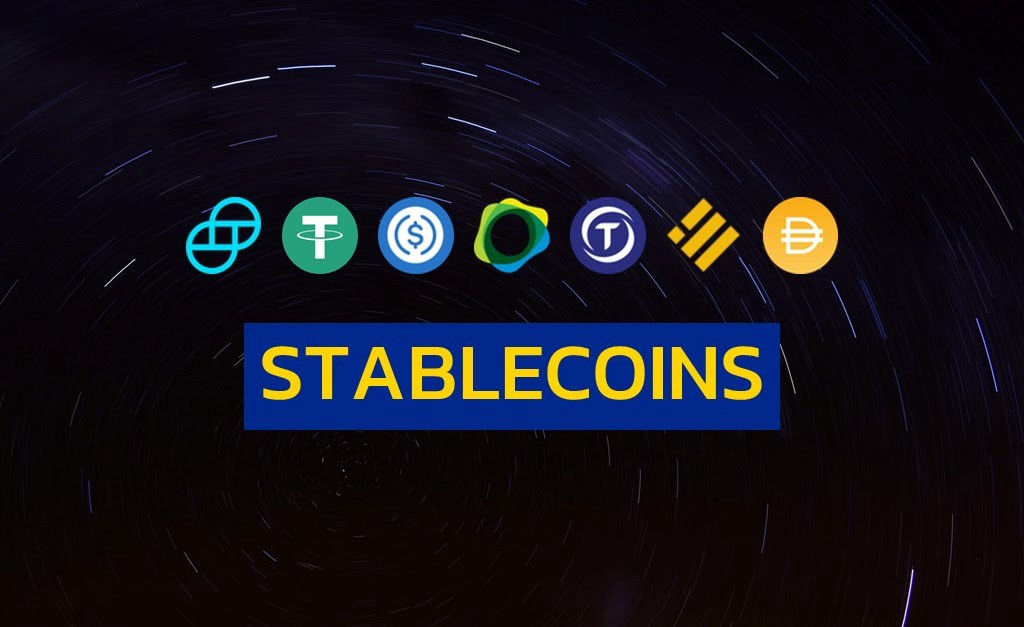
By now you’re probably asking, “How do stablecoins actually maintain their price while other cryptocurrencies fluctuate wildly?”
The most popular stablecoins use collateral. For every dollar of a particular stablecoin in circulation, there is supposed to be at least a dollar of cash held somewhere that people holding the stablecoin can redeem.
For example, a stablecoin like USDC can be issued and redeemed by anyone in the CENTRE network—a consortium of financial institutions that include exchanges like Coinbase. Users can deposit US dollars anywhere within the network and receive the equivalent amount of USDC. The dollar they just deposited is then held in reserve usually through a partner bank like Goldman Sachs.
If you're a decentralization maxi, this approach would make you pretty uneasy. Not only are collateralized stablecoins still dependent on traditional financial institutions, but there’s also centralization risk when a single authority is supposed to house all the collateral assets behind a stablecoin.
We saw this risk play out with Tether, the world's most popular stablecoin. After months of external pressure, Tether finally released a report in March 2021 revealing the assets they held as collateral. Despite initially claiming that Tether was 100% backed by real US dollars, only a fraction of its holdings — 2.9% to be exact — were actually in cash. The vast majority was in commercial paper, a form of unsecured, short-term debt. Their asset mix isn't super high-risk but marketing that everything was backed by cash was definitely misleading.
Given Tether’s massive role in facilitating crypto transactions, regulators accused the organization of creating a dollar substitute and then facilitating financial activity without any of the oversight we would expect from a bank or payment service provider
The episode exposed an inconvenient truth. While crypto is supposed to offer a decentralized alternative to traditional finance, the stablecoins that facilitate their activity are controlled by just a handful of organizations that are heavily reliant on traditional banks.
In response, Dai and Terra are two decentralized stablecoins that have emerged as popular alternatives to the traditional collateralized approach. Instead of relying on a central authority to hold onto their assets, they both rely on algorithms in their respective smart contracts to keep their prices stable.
I started explaining how each of them work but then realized this post would effectively double in size. So, to keep it brief and to save content for another post, I’ll provide a quick, four-sentence explanation.
Both Dai and Terra support rich ecosystems that offer financial like payments, lending, and even insurance. People can add or remove stablecoins from circulation by interacting with these services—like depositing your Ethereum to take out a loan in Dai. With each transaction, smart contracts dynamically adjust conditions within these services to incentivize market participants to add or remove stablecoins from circulation.
This rebalances supply and demand in a way that keeps their prices pegged at a more-or-less constant value.
Of course, algorithmic stablecoins aren’t fool-proof. While they don’t rely on a central authority holding collateral, they do rely on market participants actively trading crypto-assets to keep prices stable. Some sort of hack, a system failure, or a larger-than-expected crash in crypto prices could alter market activity in ways that destabilize the stablecoin.
Ultimately, a currency’s utility is a function of its users trusting that its value will persist. Through that lens, I would argue that there’s no perfect currency. Whether it’s the US dollar, a collateralized stablecoin, or an algorithmic one, it’s all a matter of which mechanisms you believe can continue to be trust-worthy well into the future.
The impact of stablecoins on the real world
Stablecoins and with their unique digital properties, are starting to solve real-world use-cases for real people—many of whom have never interacted with crypto before.
I’ll highlight a few of those use cases here:
Safe Haven Currency: In 2020, Dai trading volumes quadrupled to 20 million dollars per day almost overnight. Suffering from hyperinflation and restrictive government policies, citizens in Venezuela and Argentina turned to Dai as a reliable asset that could protect their wealth against local currencies rapidly depreciating in value.
Borderless Payments: Today, making cross-border payments is an expensive and cumbersome process. Experts predict that remittance--the process of workers overseas sending money back home--could be a $1.3 trillion market by 2030. While payment processors charge obscene foreign transaction fees sending money back home, stablecoins practically solve this problem for free. Someone in Canada can send Tether to a friend in India within minutes and pay almost no fees. The friend in India can then cash out Rupees at the best exchange rate available to them.
Financial Assets for the Unbanked: While many of us take this for granted in the developed world, those who don’t have a credit score or proper identification simply can’t access loans and financial services offered by traditional banks. For small business owners, street vendors, and the “unbanked”, stablecoins unlock a crypto ecosystem where they can access lending, investable assets, and other methods of wealth generation previously reserved to the wealthy.
Lower Transaction Fees: While most of the benefits so far have focused on emerging markets, stablecoins like Terra already have a significant presence in developed economies. Millions of South Korean consumers are currently purchasing from storefronts that use Terra’s blockchain to validate transactions—including Korea’s second-largest e-commerce platform TMON. Traditional credit cards and payment processors charge a 3% fee for each transaction and then take 5-14 days to settle payments. Terra, on the other hand, only takes a 1% fee and those payments are instantly available. This is life-saving for businesses with already razor-thin margins who also need to pay vendors quickly. Terra also just announced a partnership with the Washington Nationals Major League Baseball team where the stablecoin will be accepted as a form of payment at their stadium next year.
I'll close this section with a pretty incredible statistic from the Morning Consult: the number of US citizens who reportedly own cryptocurrency (24%) now outnumber citizens with traditional savings accounts (23%).
How are governments responding?
The current state of crypto regulation in the U.S is ambiguous at best and outright hostile towards at worst.
The government has had a 100+ year monopoly on money so we shouldn’t be too surprised that crypto’s ascendence is putting some higher-ups a bit on edge.
[Stablecoins] may facilitate those seeking to sidestep a host of public policy goals connected to our traditional banking and financial system: anti-money-laundering, tax compliance, sanctions and the like.
Gary Gensler (Head of the SEC) stateStatement from Aspen Security Forum
Stablecoins in particular have become too important as an asset class to continue existing without a formal definition.
How they’re classified will have significant implications for the future of crypto regulation in the US.
Here are a few possibilities:
Systemically Risky Asset: This is arguably the worst-case scenario. According to the Dodd-Frank Act, the US government can claim that stablecoins pose real “risks to U.S. financial stability” which would allow regulators to impose restrictions or even outright ban them altogether with nearly no oversight.
Security: Owning stablecoins would be similar to owning a stock. Each time you exchange a stablecoin for another cryptocurrency, it would get taxed like selling a security which effectively removes potential tax advantages of keeping transactions within the crypto universe. Stablecoin issuers would need to increase disclosure requirements about their balance sheets and what they hold as collateral.
Bank Deposit: All stablecoin issuers will be treated like banks and all stablecoin deposits would need to be FDIC insured. This might be the most crypto-friendly definition we’ve encountered so far. It’ll enforce accountability and transparency while still maintaining the key properties that stablecoins provide as digital currency.
[New Asset Class]: It’s also possible stablecoins get a whole new classification altogether. If defined properly, this would give regulators the flexibility to come up with more favorable tax conditions that won’t undermine innovation or crypto activity.
[Stablecoins] might be the most important conversation in Washington financial circles this year. How officials handle sticky questions about a relatively new phenomenon will set the precedent for a technology that is likely to last and grow, effectively writing the first draft of a rule book that will govern the future of money.
Jeanna Smialek - New York Times
While it's unclear which path our government will take moving forward, the status quo is not sustainable. Without clearly defined rules, talented crypto engineers and founders are migrating their operations to other countries with concrete, friendlier crypto regulations.
President Biden’s recent executive order on crypto showcases some newfound urgency in this effort, but it’s essential that we move quickly and thoughtfully.
We need to get this right or else suffer the most consequential "brain drain" from this new but immensely promising part of our economy.
Competing against stablecoins
Beyond regulation, the US has also signaled a desire to roll out its own stablecoin.
A Centrally Backed Digital Currency (or CBDC) would be a collateralized stablecoin backed by real dollars held by the US federal reserve. Unlike the stablecoins we just discussed, a US CBDC would be fully supported by the US government. That support means the CBDC can be used for payment, deposited into accounts, or exchanged for real dollars anywhere within our traditional financial system.
On its surface, it has all the great properties of a stablecoin with the added goodwill and trust of being officially sponsored by our wonderful government. Fed Chair Jerome Powell even went as far to say: “You wouldn’t need stablecoins, you wouldn’t need cryptocurrencies if you had a digital US currency.”
While the US is still "exploring" this idea, several countries are well ahead of us in this endeavor. Nigeria and the Bahamas have already launched their own CBDCs. China, Japan, and Sweden have commenced trials, and the European Central bank is actively making plans to roll out their own versions soon.
And their goals aren’t just to hold onto their monopoly on money against the rising tide of digitalization.
While that’s certainly one appeal, every central bank has tailored the design of their CBDC program to suit the specific goals and circumstances of their unique economies.
Nigeria created its CBDC as a way to increase financial inclusion, especially in areas where geography prevents easy access to physical banking.
The Eastern Caribbean Central Back expanded their CBDC program to areas struck by a volcanic eruption last year as a backup form of payment when traditional financial infrastructure failed.
China and Japan have stated that their CBDCs aim to facilitate international trade and increase their economic standing around the world.
These unique goals then motivate technical and policy decisions behind topics like:
Issuance: How does the CBDC get created? Who can distribute it? And where can it get redeemed for cash?
Ledger Updates: Where will transaction information be maintained and validated? Who can update, read, and validate transactions on this ledger?
Privacy and Anonymity: What payments will be kept anonymous and what payments will require existing financial policies like Know Your Customer?
Account Benefits and Restrictions: Will the CBDC be interest-bearing and automatically increase over time? Will governments limit the amount people can hold or withdraw?
Security and Resilience: How will this digital currency withstand attacks from hackers? How can CBDCs still function during times of crisis and in areas that don’t have any data connection?
China’s CBDC Pilot
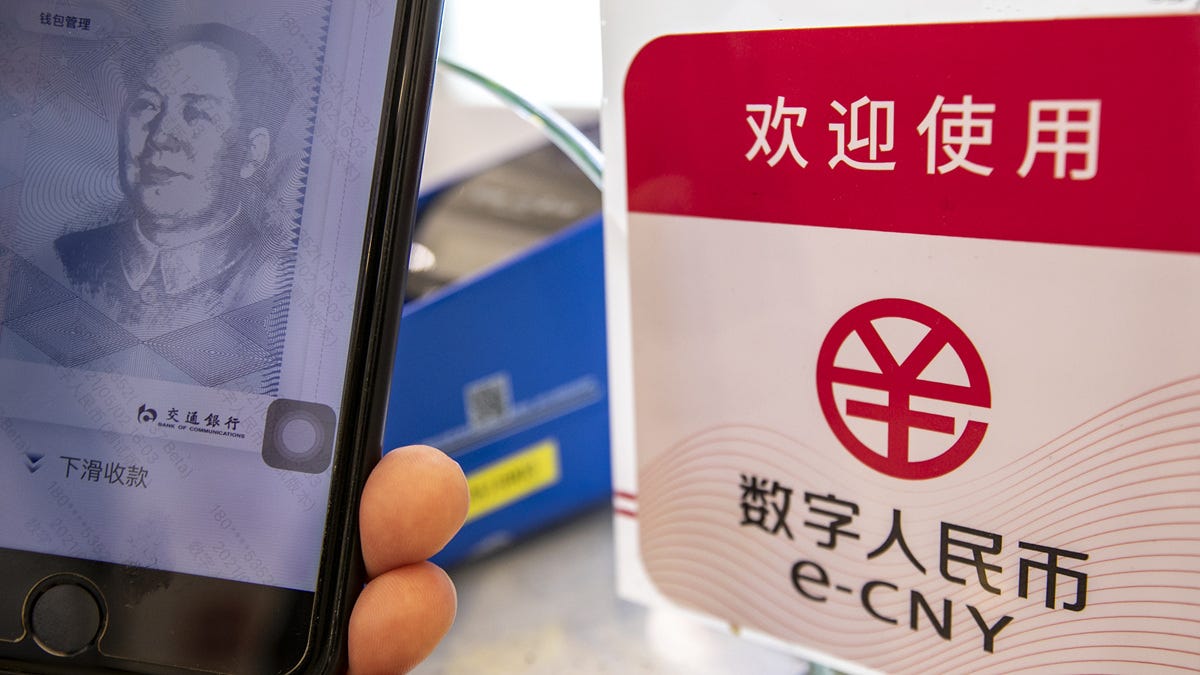
Let's spend some time on China’s digital RMB because it showcases the ambition, challenges, and potential wide-ranging impact of a successful CBDC program. After half a decade of research, the CBDC pilot launched in 2020 and is progressing rapidly. Today, more than a hundred million individuals are holding digital RMB with billions of yuan in transaction volume in just the past few months.
The media narrative from the West characterizes China’s CBDC as a potent threat to the dollar’s role as the world’s reserve currency. China's ushering in a new age of digital trade and forcing the slow-footed US to play a diminished role in the new global economy.
In my opinion, these headlines are a bit sensationalist while also ignoring some of the critical details about what’s really happening.
For starters, China’s CBDC will not dethrone the dollar overnight. 80% of international trade is still denominated in US dollars. Dollars account for 60% of all money held by government reserves. And commodities like oil continue to be dollar-valued per international standard.
No new currency—digital or analog—can unwind that level of critical dependence overnight.
However, that doesn’t mean a soon-to-be-widely-available digital RMB won’t have huge consequences for the US.
While China’s CBDC won't replace the US dollar overnight, it will meaningfully decrease China’s and its trade partners’ dependence on the US. A digital RMB will make trading with China feel absolutely frictionless for governments and businesses that hold that currency.
Today, any significant cross-border payment between foreign entities has to go through SWIFT. It's a highly analog, process-laden operation that only the largest importers and exporters have the resources to navigate. And as we're seeing today with Russia, transactions could get blocked due to trade restrictions imposed by the US and its allies.
China’s CBDC program would circumvent this system, allowing institutions to receive loans and financing decisions within minutes. And those funds would be immediately available without any fees.
All of a sudden, small and mid-sized companies from abroad could trade and access China’s nearly unlimited supply of goods without the difficulties associated with today's system of international trade. Transacting with China and Chinese businesses will become as easy as buying goods from Amazon or Alibaba.
If history has taught us anything, it’s that economic activity always gravitates towards solutions that are cheaper and faster.
A digital RMB would also allow China to adjust fees, interest, and exchange rates depending on which country it's trading with and which goods are bought and sold.
Imagine a system where China could offer cheaper loans if the money is spent on strategic industrial sectors. Then imagine being able to customize those rates instantly based on the party’s ability to pay, their transaction history, and their relationship to the Chinese government.
As the world’s largest exporter, China already has the foundation to promote their currency and international standing. We’re seeing this play out with some of China’s key trading partners in its Belt and Road Initiative (BRI). It is the world’s largest infrastructure development program that's 12 times the size of the US-led Marshall Plan after WWII. The 139 member nations of Belt and Road, including China, account for 40% of global GDP and 63% of the world’s population.
Today, only 14% of trade within Belt and Road is still denominated in US dollars and the total amount of trade denominated in RMB would be valued more than Japan’s total global exports. Singapore alone saw payment traffic with China grow by an astounding 231% this past year. And this is before China rolls out its digital currency internationally alongside favorable exchange rates to incentivize trade and adoption even further.
What China is trying to accomplish is unprecedented. No one has ever attempted to elevate a currency’s international standing by launching a digital variant. By being at the forefront of CBDC development, China is taking the lead in designing and implementing the rules and regulations of digital currencies on a global scale.
If they’re successful, it’s not impossible to imagine a Chinese CBDC slowly eroding the dollar’s dominance. While a digital RMB won’t become the world’s reserve currency overnight, transaction by transaction, country by country, it’ll become the preferred medium of exchange for key industries and trade routes. And this won't just happen to BRI countries, even America’s most loyal allies have expressed sincere interest in decreasing their dependence on the dollar.
Without a US currency being the de facto mode of international exchange, the US would have a much harder time imposing sanctions and borrowing money at historically low interest rates. This would diminish both our international influence and the ability to procure the cheap loans our growing economy has become so dependent on.
With over 100 different countries already exploring their own implementation of CBDCs, the global history of money is about to enter a new chapter.
The dollar is facing its first credible threat to its monopoly on money at home and abroad. Domestically, an emerging crypto ecosystem will slowly replace the rails of traditional finance. Internationally, foreign CBDCs will offer an alternative to US dollars along with superior access, convenience, and incentives.
While our government hasn’t committed to anything beyond “stepping up research and public engagement”, we’ll need to move quickly or get left behind.
The stakes are high and how the US government responds in the coming months will impact both its international standing and the future of its citizens.
What Happens Next?
Given the program's early success, there’ll be a temptation to copy the top-down Chinese approach.
But unlike China, we’ll need to carefully consider how this approach impacts our country’s founding principles of privacy and individual sovereignty. A CBDC-empowered federal government would accumulate mountains of precise information about every citizen's spending activity.
Yes, you can argue that banks, credit cards, payment processors, the NSA, and “Big Tech” already have access to this information, but a central, closed-looped CBDC would funnel all of that data to our government and give them complete control over how, when, and who can transact.
These aren’t abstract, ivory-tower discussions about privacy and personal liberty. We’ve already seen numerous examples of governments censoring speech and curtailing individual liberties by manipulating the rules around money.
In 2021, the Chinese government shut down Hong Kong’s pro-democracy newspaper, Apple Daily, not by censoring its content, but by freezing bank accounts and ordering businesses to no longer transact with the publication. More recently, Canada—America’s overly-polite neighbors to the north—froze the bank accounts of anyone who participated or donated to the peaceful trucker protest in Ottawa without due process or a court order.
Money is freedom. And I'd personally be uncomfortable having that privilege granted solely by being in the good graces of our government. To repeat a Web3 platitude: “Can’t be evil” is better than “Don’t be evil.”
For better or worse, I also don’t think we can fully copy the Chinese model even if we wanted to. If the sorry state of our public-facing government websites is any indicator, I’m highly skeptical of our public sector's capability to build and distribute a scalable, secure, and resilient digital currency.
The Chinese government partnered closely with WeChat and Alibaba to build robust payment infrastructure and even allowed them to effectively operate as banks.
In contrast, the US’ largest technology companies—arguably the most capable of helping the government stand up to this program—are also the ones facing the most scrutiny and hostility. Facebook attempted to launch its own stablecoin but received severe criticism and regulatory pushback every step of the way. In this current climate, I have a hard time imagining the American public and government allowing Apple or Google to move more aggressively into banking or payments.
This hostility towards tech will need to change.
China’s official CBDC launch will be our Sputnik moment, ushering in a new Space Race that will determine the digital future of money. To succeed, we’ll need to employ the same level of public-private sector cooperation that led to our landing on the moon.
Our CBDC must be designed with this partnership in mind from both a technology and policy perspective.
Part of that will be avoiding the temptation to overreach. A US CBDC should fulfill a similar role as cash today and maintain the same limited footprint. It should be anonymous, held in modest quantities, and not encompass every aspect of financial activity.
The government could implement a two-tier system where the Federal Reserve issues these digital dollars and then relies on the private sector to hold and distribute them.
Because technology companies are well-equipped to build these capabilities, our government avoids the arduous task of opening accounts, handling transactions, and building infrastructure to keep all this activity secure. Google, for example, encounters numerous cyberattacks per day without any significant downtime. I have a hard time believing our public sector can accomplish that level of technical reliability.
The private sector benefits by having a less capital-intensive way to get into payments. Today, companies need to use their own cash as collateral to facilitate and settle transactions. Because the CBDC has a direct claim to cash held by the government, companies simply act like “mobile wallets” and keep track of which wallet owns a specific CBDC balance.
Our digital dollar should also support the emerging crypto-economy rather than trying to replace it.
It should provide an easier path for crypto to convert to real dollars so private-sector stablecoins like Tether or USDC can become more ubiquitous in the traditional financial system. In return, our interoperable CBDC can benefit from the innovation, rich developer ecosystem, and pro-democracy ethos of today’s major cryptocurrencies.
The US will also need to figure out its international CBDC strategy. China has the luxury of being way ahead of its major trading partners in terms of digitizing cross-border trade. With China taking the lead, BRI countries will likely adopt their technology, infrastructure, and policy recommendations to facilitate better trade. Unfortunately, because many of our trading partners have already started their own CBDC explorations, it’s unlikely the US can show up this late to the party and just expect everyone to hand them the proverbial aux cord.
Instead, the US should seek to make multi-CBDC arrangements with its major trading partners, establishing a clear set of rules and standards on how CBDCs convert to one another. It'll require backbreaking international negotiation but there's no real path forward to a fully digital global economy without it.
So you’ve probably noticed this section is conspicuously sparse on details because...well...it's a really hard problem with a lot of unknowns that I'm frankly not qualified to define.
But I can confidently offer this opinion: we are well past the stage of wondering whether we need digital currencies. The private sector is growing increasingly comfortable with non-physical money, rival countries are threatening our economic leadership by digitizing trade, and a dynamic but still nascent crypto-economy is steadily disrupting our traditional financial system.
The real question we should now be asking is: “Will we take advantage of these emerging trends or squander a new frontier for innovation?”
Additional Content
If this piqued your interest, check out the awesome content that inspired this post!
📰 A beginner’s guide to stablecoins by the Shrimpy Team
📰 Why Washington Worries about Stablecoins by Jeanna Smialek from New York Times
📰 Facebook’s Diem is Dead. What does that mean for stablecoins?
📰 Crypto Theses for 2022 - Market research firm Messari releases an annual report that’s must-read for crypto enthusiasts
📚 Cashless by Richard Turrin. Incredibly interesting book about how China’s payments system has evolved over the years.
📺 Bankless Podcast Episode #77 -Richard Turrin talks China, crypto, and CBDC
📰 Bitcoin and the US Fiscal Reckoning by Avik Roy from National Affairs
📰 The Dollar: The World’s Currency - Really interesting article about how the US became the world’s reserve currency
📰 CBDC’s and Stablecoins - Mckinsey’s thoughts on how CBDCs and Stablecoins can coexist
📰 Digital currencies and the future of the monetary system - Agustín Carstens’ presentation to Bank for International Settlements
🏛 February’s Report on Digital Currencies by the International Monetary Fund
From a regulatory standpoint, it is also important to consider the arbitrage opportunities that may arise by having multiple stable coins. Although USDC and USDT are theoretically pegged to $1 they sometimes trade at a discount relative to the other. Today , if I have a $1 bill it's the same at every place. But this won't be the same if CBDC, USDC and USDT don't trade at the same value at all times.